Newsletter Subscribe
Enter your email address below and subscribe to our newsletter
Enter your email address below and subscribe to our newsletter

 ByJohn A
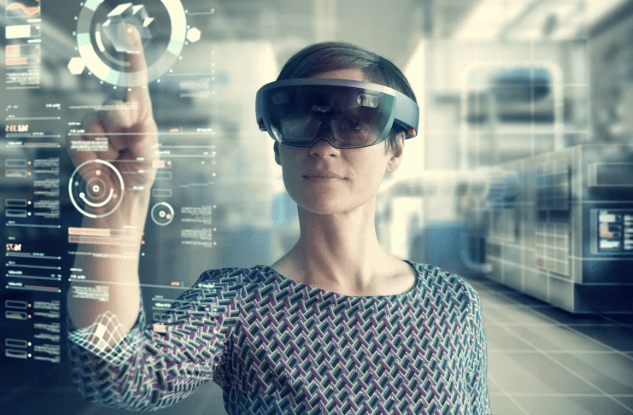
Mixed reality blends the physical and the digital in real time, creating a space where virtual content overlays and interacts with the real world. It rests on sensor fusion, spatial mapping, and real-time rendering to anchor digital items to actual locations. The result is a continuum that supports training and collaboration, while raising questions about ethics, privacy, cognitive load, and scalability. The practical path depends on workload, comfort, and budget, but the implications extend beyond initial use.
Mixed Reality (MR) blends physical and digital environments in real time, creating a continuum where virtual content overlays, augments, or interacts with the tangible world.
The immersive definition signals a spectrum, not a single feature, guiding assessment of value.
Mixed reality advances depend on device limitations, yet potential remains in novel user interactions, data fusion, and autonomous context responsiveness.
In MR, real space is augmented through sensor fusion, spatial mapping, and real-time rendering that anchors digital content to the physical world.
The result is immersive mapping that aligns virtual elements with tangible surroundings, enabling fluid interaction.
Spatial anchoring establishes persistent reference points, allowing content to persist across viewpoints.
The approach remains analytical, speculative, and oriented toward enabling freedom through coherent integration.
Real-world applications of mixed reality span training, collaboration, and extended workflows, where digital overlays augment perception and decision-making in situ.
The analysis notes potential gains alongside risks: training ethics shape protocol, accountability, and transparency; collaboration metrics reveal team effectiveness, information flow, and coordination overhead.
Practitioners should weigh scalability, privacy, and cognitive load as MR expands from trials to routine, multidisciplinary use.
Deciding among MR platforms and hardware requires a clear framework: evaluate integration needs, user comfort, and the expected workload, then map capabilities to practical use cases.
Choosing platforms, Gear considerations, and Practical budgeting inform Path selection, balancing flexibility with reliability.
User comfort guides immersive longevity, while practical budgeting constrains choices; a deliberate assessment reveals viable MR routes for diverse freedom-seeking audiences.
MR usage introduces privacy tradeoffs: pervasive data collection from sensors, cameras, and interactions; while empowering experiences, it raises concerns about consent, profiling, and retention. Analysts speculate users seek transparency, strong controls, and decoupled data practice for freedom.
Glancing at anachronistic goggles, the best entry level MR devices for beginners include affordable headsets with good tracking and pass-through: HoloLens-like features on Windows, Quest 2/Pro-like options, and mixed reality readers that spark exploration and autonomy.
See also: Microservices Security Best Practices
Yes, MR content can be created without coding skills, as creators leverage scripting free workflows, no coding MR content, and visual tools to assemble experiences, including creating UI assets, while maintaining analytical, speculative clarity for freedom-seeking audiences.
“Time will tell.” Mixed Reality impacts accessibility by enabling accessible interfaces, but demands inclusive design, privacy considerations, and safety guidelines; it remains speculative whether universal usability is achieved, as freedom-oriented users seek adaptable, transparent, error-tolerant experiences.
Health and safety considerations in MR include health hazards, ergonomic design, privacy concerns, user data collection, accessibility features, and inclusive design, with a clear-eyed, analytical, speculative view on how devices balance freedom with responsibility for diverse users.
In sum, mixed reality emerges as a pragmatic bridge between tangible work and digital augmentation, refining how tasks are learned, shared, and executed. The most striking stat suggests that up to 60% of complex workflows could benefit from MR-enabled overlays without increasing cognitive load, hinting at scalable efficiency gains. Yet the field remains constrained by privacy, comfort, and integration challenges. If these hurdles are managed, MR could redefine collaboration, training, and iterative design across industries.